
The Transformative Power of Yoga: A Complete Guide for Mind, Body & Soul
Yoga is more than just stretching on a mat. It’s an ancient practice that started in India over 5,000 years ago and has now become a global way to feel stronger, calmer, and more connected. The word “yoga” comes from the Sanskrit word “yuj,” which means “to unite” — uniting your body, mind, breath, and spirit into one harmonious whole.
In today’s busy world — full of deadlines, screens, traffic, and constant notifications — most people feel stressed, tired, anxious, or disconnected. Yoga offers a simple, powerful solution: it helps you slow down, breathe deeply, move intentionally, and rediscover inner peace. Whether you are a student, working professional, parent, or retiree, yoga can fit into your life and bring real change.
This guide explains what yoga really is, how it benefits every part of you (body, mind, emotions, and spirit), the main types of yoga, and easy ways to start today — even if you’ve never tried it before.
What Yoga Really Is: More Than Just Postures
Most people think yoga is only about doing poses (called asanas). But traditional yoga is much bigger. The ancient sage Patanjali described yoga as an eight-limbed path in the Yoga Sutras:
- Yamas (ethical rules: non-violence, truthfulness, non-stealing, etc.)
- Niyamas (self-discipline: cleanliness, contentment, self-study, etc.)
- Asana (physical postures)
- Pranayama (breath control)
- Pratyahara (withdrawal of senses)
- Dharana (concentration)
- Dhyana (meditation)
- Samadhi (state of deep peace and unity)
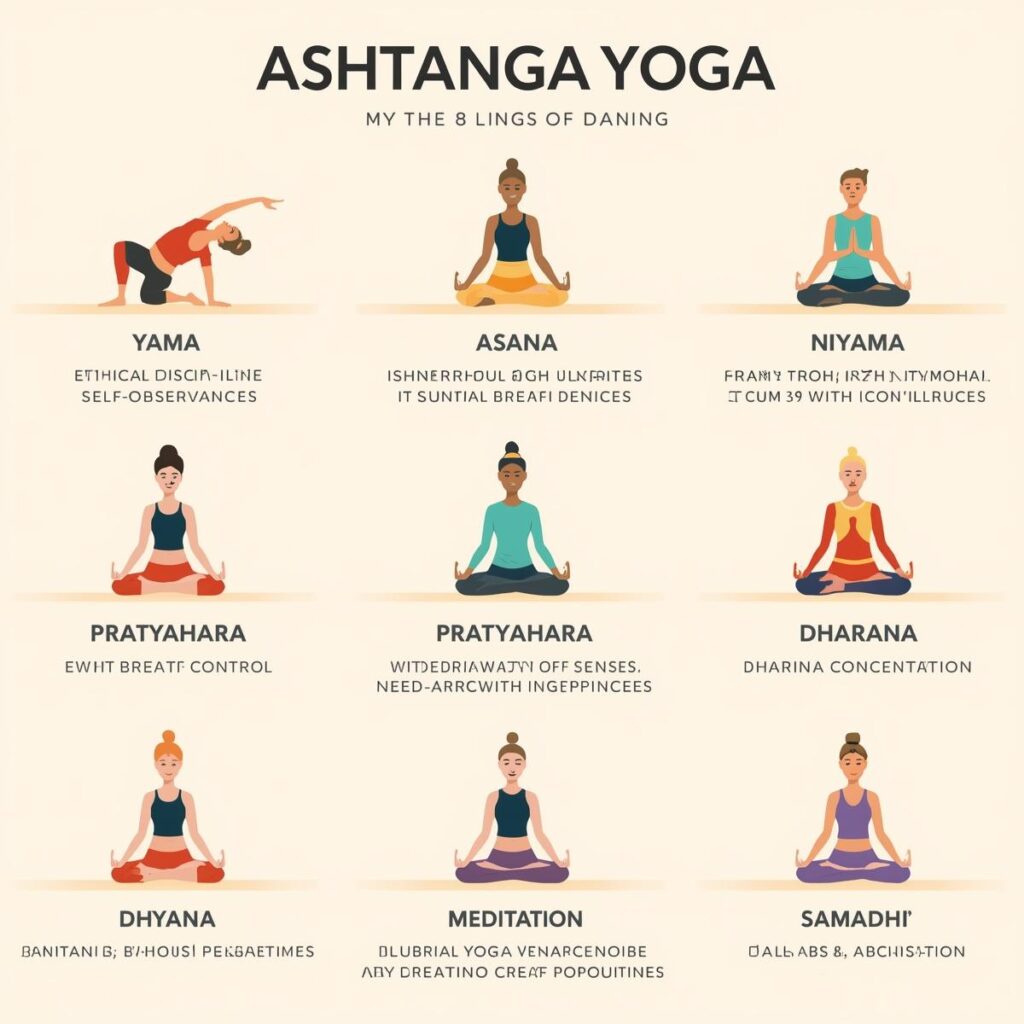
So yoga is a complete lifestyle — not just exercise. The poses are important, but breathing, mindfulness, and living with kindness matter just as much.
Unlike gym workouts that target one muscle group, yoga works the whole body together. Breath guides every movement, making even simple stretches more powerful. Over time, yoga helps balance the nervous system, reduce stress hormones, and bring calm even in chaotic moments.
Physical Benefits: Building a Strong, Flexible, Healthy Body
Yoga gives your body many gifts that go far beyond what running or lifting weights can do.
- Flexibility & Mobility
Regular practice gently stretches muscles, tendons, and joints. Poses like Downward Dog, Cat-Cow, and Seated Forward Bend open the spine, hips, and hamstrings. Studies show yoga can reduce chronic back and neck pain by 20–30% by improving posture and strengthening supporting muscles. - Strength & Endurance
Holding poses like Plank, Warrior II, Chair Pose, or Tree Pose builds functional strength using your own body weight. You engage core, arms, legs, and back at the same time — no gym needed. This helps prevent age-related muscle loss (sarcopenia) and keeps you strong for daily activities. - Better Posture & Spinal Health
Many people sit for hours every day, leading to rounded shoulders and tight hips. Poses like Cobra, Bridge, Mountain Pose, and twists realign the spine, relieve tension, and strengthen postural muscles. - Improved Breathing & Lung Capacity
Pranayama (breathing exercises) like alternate nostril breathing or deep belly breathing expand lung capacity, increase oxygen intake, and train the diaphragm. This helps people with asthma, anxiety, or low stamina breathe more easily. - Heart Health & Circulation
Even gentle yoga lowers blood pressure, reduces bad cholesterol, and improves blood flow. Research shows it can be as effective as moderate aerobic exercise for heart health. - Detox & Immunity
Twisting poses massage internal organs, improve digestion, and support lymphatic drainage. Yoga also lowers cortisol (stress hormone) and increases antioxidants, strengthening the immune system. - Longevity & Cellular Health
Studies have found that regular yoga practice lengthens telomeres (protective caps on chromosomes), slowing cellular aging and potentially adding healthier years to life.
In short, yoga builds a resilient, flexible, and energetic body that feels good every day.
Mental & Emotional Benefits: Finding Calm in the Chaos
Yoga is one of the most powerful tools for mental and emotional health — especially today when anxiety, depression, and burnout are common.
- Stress & Anxiety Relief
Yoga shifts the body from “fight-or-flight” (sympathetic nervous system) to “rest-and-digest” (parasympathetic). Deep breathing and mindful movement lower cortisol levels by 25–30%. Many people feel noticeably calmer after just 20 minutes. - Better Focus & Memory
Practices like Trataka (candle gazing) and meditation increase concentration. Brain scans show yoga grows gray matter in the hippocampus — the area responsible for learning and memory. - Emotional Balance & Resilience
Yoga helps you observe emotions without getting overwhelmed. The ethical principles (yamas & niyamas) encourage kindness, truth, and contentment — reducing inner conflict and reactivity. - Improved Sleep
Evening routines like Yoga Nidra or gentle stretching calm the mind, regulate circadian rhythms, and reduce racing thoughts. Many people fall asleep faster and sleep deeper. - Reduced Overthinking & Rumination
Mindfulness in yoga trains the mind to stay present instead of replaying worries or regrets. This lowers symptoms of anxiety and mild depression.
Yoga doesn’t erase problems — but it gives you better tools to handle them with clarity and calm.
Spiritual & Holistic Benefits: Connecting to Something Bigger
- Inner Peace & Contentment
Yoga teaches detachment from ego and constant wanting. You start finding joy in simple things — breath, movement, silence. - Sense of Purpose & Connection
Group classes or practicing in nature build community and compassion. Many people feel less lonely and more connected to others and the environment. - Ethical Living & Compassion
Principles like ahimsa (non-harm) inspire kinder choices — toward yourself, others, animals, and the planet. - Preventive Health & Self-Healing
Yoga supports immunity, digestion, sleep, and stress management, reducing the need for medication and doctor visits over time.
Yoga isn’t about religion — it’s about realizing your own potential for peace, strength, and joy.
Popular Types of Yoga (Choose What Suits You)
Yoga’s deepest gift is spiritual — reconnecting you to yourself and the world around you.
- Hatha Yoga — Slow, balanced postures and breathing. Perfect for beginners.
- Vinyasa Yoga — Flowing sequences linked with breath. Great for energy and cardio.
- Ashtanga Yoga — Set, challenging series. Builds discipline and strength.
- Iyengar Yoga — Focus on alignment with props. Ideal for injury recovery.
- Kundalini Yoga — Breathwork, chants, and energy awakening. Very spiritual.
- Yin Yoga — Long-held, deep stretches. Restorative and relaxing.
- Restorative Yoga — Supported poses with props. Excellent for deep relaxation.
Start with Hatha or Vinyasa if you’re new – they’re widely available and beginner-friendly.
How to Start Yoga Today (Practical Steps)
You don’t need fancy clothes, mats, or studios to begin.
- Set a Clear Intention Ask yourself: Do I want more energy, less stress, better sleep, flexibility, or inner calm?
- Choose Easy Resources
- Free YouTube channels: Yoga with Adriene, Yoga with Kassandra, Boho Beautiful
- Apps: Down Dog, Glo, Asana Rebel (many free sessions)
- Local classes or community parks (especially in Hyderabad)
- Start Small
15–20 minutes, 3–5 days a week. Begin with Sun Salutations, Cat-Cow, Child’s Pose, and simple breathing. - Focus on Breath
Inhale to lengthen, exhale to fold or twist. Breath makes poses feel easier and deeper. - Listen to Your Body
Never force a pose. Use modifications, blocks, or straps. Pain is a signal to stop. - Create a Simple Routine
Morning: energizing flow
Evening: gentle stretches + breathing
Anytime: 5-minute breathing break at work - Track Small Wins
Notice better sleep, less back pain, calmer mind, or easier breathing after 2–4 weeks.
Integrating Yoga into Daily Life
Yoga doesn’t have to stay on the mat. Try these mini-practices:
- Morning: 5 Sun Salutations to wake up the body
- Work break: Seated spinal twists or neck rolls
- Evening: 10 minutes of deep belly breathing or legs-up-the-wall
- While walking: Focus on breath and footsteps (walking meditation)
- Before bed: 5 minutes of gratitude + slow breathing
Even 5 minutes a day can shift your mood, energy, and outlook.
Conclusion: Yoga Is for Everyone -Start Today
Yoga is not about being perfect, flexible, or spiritual – it’s about showing up for yourself with kindness and consistency. It strengthens your body, calms your mind, balances your emotions, and reconnects you to a deeper sense of peace and purpose.
In a world full of noise and hurry, yoga offers something rare: a quiet space where you can breathe, move, and simply be. Wherever you live, you can start right now — no special equipment, no previous experience needed.
Roll out a towel, take a deep breath, and begin. Your body, mind, and soul will thank you.
okay