
Benefits of Meditation for Beginners: Reduce Stress & Build Mental Strength
In Today’s Busy World, Mental Strength Is Essential -And the Benefits of Meditation Can Help You Build It
Deadlines, Pressure, money worries, and constant phone notifications can slowly drain your energy. Most of the time, the tiredness is in your mind, not your body.
If you are looking for ways to manage stress and gain better control over your emotions, the benefits of meditation can help you develop inner calm, mental clarity, and stronger emotional stability. Understanding the benefits of meditation is the first step toward building lasting mental strength.
But let’s be honest. Meditation is not about theory or complicated techniques. It is about creating space in your mind to breathe, think clearly, and respond calmly. In moments of stress or emotional pressure, even a few minutes of awareness can make a meaningful difference. This article focuses on the real, practical benefits of meditation – how it supports stress relief, mental health, and emotional stability in busy modern life.
Why the Benefits of Meditation Matter for Stress and Mental Health
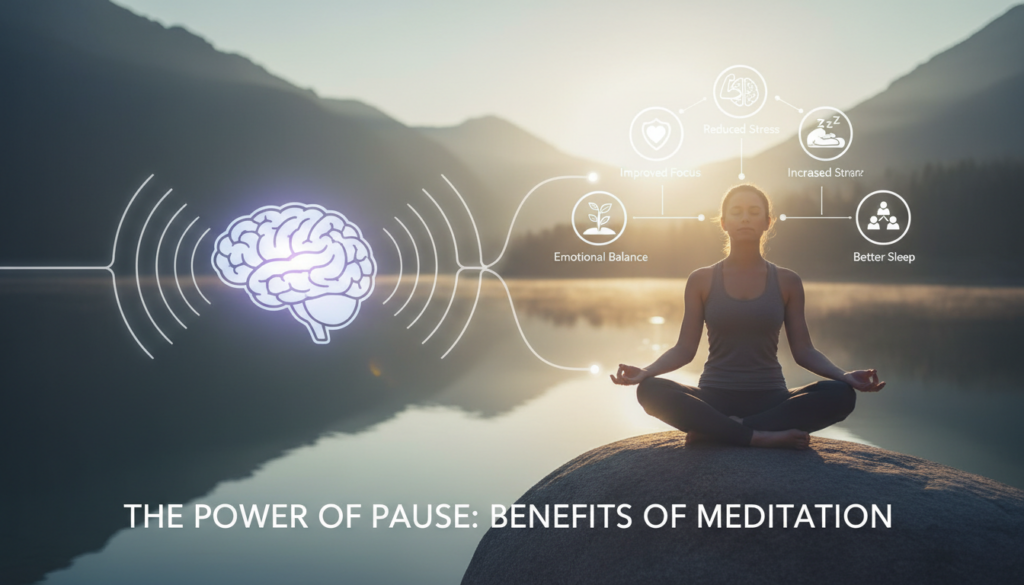
Stress isn’t always dramatic. It often shows up quietly: overthinking at night, getting irritated at small things, trouble focusing, or feeling emotionally flooded. When stress stays constant, it keeps your nervous system in “fight or flight” mode, releasing cortisol that eventually weakens concentration, mood, sleep, and even physical health. Over time, this weakens focus, emotional balance, sleep quality, and even physical health. Meditation helps interrupt this cycle.
When you practice meditation, even for a few minutes, your breathing slows down and your heart rate becomes steady. The body shifts from stress mode into relaxation mode. This signals safety to the brain. With consistent practice, this response becomes easier to access even during difficult situations.
Research Supporting the Benefits of Meditation
Research from institutions such as Harvard Medical School shows that mindfulness meditation can lead to measurable changes in brain areas connected to memory, emotional regulation, and self-awareness. Studies supported by the American Psychological Association suggest that meditation reduces symptoms of anxiety and depression when practised regularly. A review from Johns Hopkins University found that meditation programs provide moderate improvements in stress, anxiety, and emotional well-being.
These findings clearly highlight the long-term benefits of meditation for emotional resilience and stress management.
What Mental Strength Actually Means – And How the Benefits of Meditation Build It
Mental strength is not about suppressing emotions or pretending everything is fine. It is the ability to stay calm under pressure, recover from setbacks, manage negative thoughts, and make decisions with clarity instead of panic. Meditation trains this ability.
When you sit quietly and observe your thoughts, you begin to notice something important: thoughts are temporary. They come and go. Instead of reacting to every fear or doubt, you learn to pause. That pause creates power. It allows you to choose your response instead of being controlled by emotion.
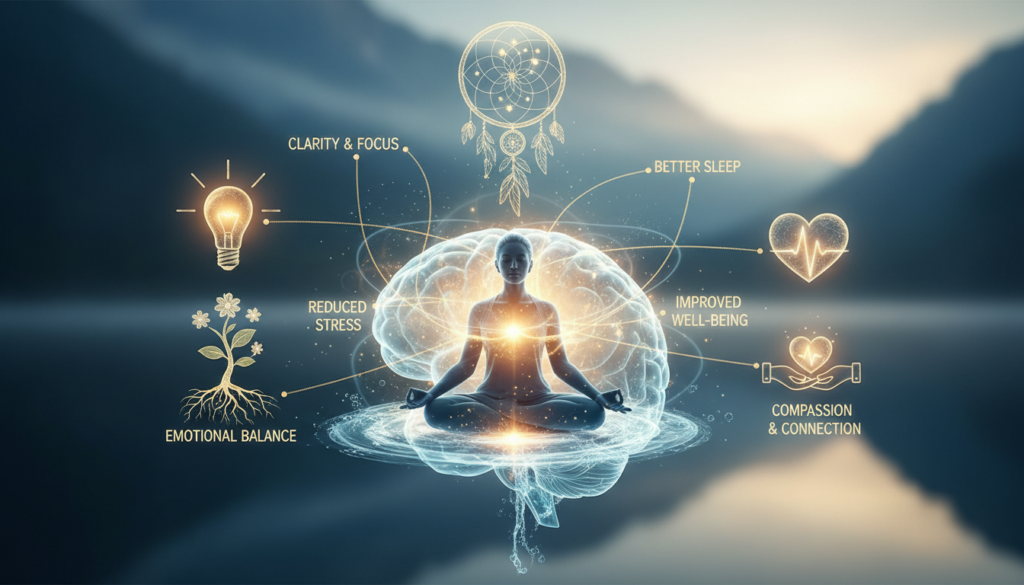
Over time, the benefits of meditation improve:
- Emotional stability
- Focus and concentration
- Patience
- Self-confidence
- Resilience after failure
Mental strength grows slowly, just like physical strength. Meditation is like daily exercise for the brain.
Real-Life Examples of the Benefits of Meditation
It is easy to talk about benefits in theory, but what does this look like in daily life?
- Students gain better focus and lower exam anxiety with short breathing before study sessions.
- Professionals reduce burnout and make clearer decisions under pressure instead of reacting emotionally.
- People facing uncertainty build emotional grounding so overthinking doesn’t spiral.
- Anyone struggling with sleep finds calmer nights and deeper rest.
The biggest value of the benefits of meditation isn’t instant calm — it’s long-term emotional steadiness.
A Simple Way to Start Meditation
You do not need special equipment or a silent mountain environment. You only need willingness and a few minutes.

Here is a basic method for beginners:
- Sit comfortably in a chair or on the floor. Keep your back straight but relaxed.
- Close your eyes or soften your gaze.
- Focus on your breathing. Notice the air moving in and out.
- When thoughts appear (and they will), gently bring your attention back to your breath.
- Start with 5 minutes a day. Gradually increase if you feel comfortable.
The goal is not to stop thinking. The goal is to notice thoughts without being pulled away by them.
Different Types of Meditation and Their Benefits
Many people think meditation means sitting silently and doing nothing. But there are different types of meditation, and each serves a different purpose.
Understanding these types helps you choose the best meditation technique for your needs.
Mindfulness Meditation
Mindfulness meditation is one of the most popular and simple methods. In this practice, you focus on your breathing while observing your thoughts without judgment.
When your mind wanders, you gently bring your attention back to your breath. This technique improves focus, emotional control, and self-awareness. It is ideal for beginners who want mental clarity and stress reduction.
Guided Meditation
Guided meditation involves listening to a recorded voice that guides your breathing or imagination. This method is helpful for beginners who struggle with silence or distraction.
It provides structure and makes meditation easier to follow. Many people use guided meditation for relaxation and sleep.
Loving-Kindness Meditation
Loving-kindness meditation focuses on developing compassion. In this practice, you repeat positive phrases for yourself and others.
This technique helps reduce anger, resentment, and negative thinking. It supports emotional healing and improves relationships.
Body Scan Meditation
In body scan meditation, you slowly focus on different parts of your body, from head to toe. You observe sensations without trying to change them.
This method is useful for releasing physical tension and improving sleep quality.
Walking Meditation
Walking meditation is perfect for people who feel restless while sitting. In this practice, you walk slowly and pay attention to each step and breath.
It combines movement with awareness and can be easier for active individuals.
How to Choose the Right Meditation for You
Choosing the best meditation technique depends on your personal goals and comfort.
- If you struggle with overthinking and distraction, mindfulness meditation is a strong starting point.
- If you feel emotionally heavy or hold onto anger, loving-kindness meditation may support emotional balance.
- If your body feels tense due to stress, body scan meditation can help you release physical discomfort.
- If sitting still feels uncomfortable, walking meditation might suit you better.
- If you are completely new and unsure how to begin, guided meditation provides helpful direction.
The most important rule is this: the best meditation is the one you can practice consistently. Start simple. Practice daily. Adjust slowly based on your experience.
How Long Until You Feel the Benefits of Meditation?
This is one of the most common doubts.
Some people feel calmer after the first session. For others, changes are gradual. Research suggests that practicing consistently for 2 to 4 weeks can start producing noticeable improvements in stress levels and emotional control.
The key is consistency, not perfection. Missing one day does not mean failure. What matters is returning to the practice. With regular practice, the benefits of meditation become more noticeable in daily life.
Long-Term Benefits of Meditation for Lasting Mental Strength
The long-term benefits of meditation go beyond relaxation and directly support mental strength, clarity, and emotional balance. Meditation is not only about reducing stress. It builds awareness, patience, and clarity – qualities that shape long-term success.
When you develop the habit of pausing before reacting, your communication improves. When your focus strengthens, productivity increases. When emotional stability grows, relationships become healthier.
Mental strength affects every area of life: career, education, personal growth, and physical health. In a world that constantly demands attention, meditation teaches you to control your attention. That alone is powerful.
Common Mistakes Beginners Make (and How to Avoid Them)
Starting meditation can feel exciting. Many people begin meditation for stress relief, better focus, or mental clarity. But after a few days, some beginners feel confused or discouraged. The problem is not meditation itself. The problem is unrealistic expectations and small misunderstandings.
Understanding common meditation mistakes can help you stay consistent and see real benefits.
Expecting Instant Calm
One of the biggest mistakes beginners make is expecting immediate peace. After one session, they expect their mind to become completely silent. When thoughts continue, they feel they are doing it wrong.
But meditation is not about stopping thoughts. The mind naturally thinks. Meditation teaches you to notice thoughts without reacting to them. Calmness develops slowly with practice.
Trying to Meditate Perfectly
Many beginners worry about posture, breathing patterns, or sitting in a specific way. They believe meditation must look perfect to work.
In reality, meditation should feel comfortable. Simplicity works best.
Practicing Only During Stress
Some people try meditation only when they feel overwhelmed. They treat it as a quick fix for anxiety.
Meditation works better as a daily habit.
Comparing Your Progress with Others
Another common mistake is comparison. Meditation progress is personal.
Quitting Too Early
Beginners sometimes stop within a week because they feel restless or distracted. Restlessness is normal.
Instead of quitting, shorten your session and continue. Even five minutes daily is powerful when done regularly.
Combining Yoga and Meditation for Even Stronger Benefits
Many people search for yoga and meditation together. While they are connected, they are not the same. Yoga focuses mainly on physical movement, flexibility, and breathing exercises. Meditation focuses on mental awareness and emotional stability.
Yoga prepares the body. Meditation trains the mind.
When your body feels stiff or tense, sitting for meditation can be uncomfortable. Gentle yoga stretches help release muscle tension and improve breathing. After yoga, meditation feels easier and more natural. You do not need complex poses. Simple movements are enough, such as:
- Neck rotations
- Shoulder rolls
- Gentle forward bending
- Slow deep breathing
After five minutes of stretching and breathing, sit quietly for meditation. This combination calms both the body and mind.
Yoga reduces physical stress.
Meditation reduces mental stress.
Together, they improve overall well-being.
Simple Daily Routine for Beginners
If you are unsure how to combine yoga and meditation, try this basic routine:
- Start with five minutes of gentle stretching. Focus on relaxing your shoulders and back.
- Next, practice three minutes of deep breathing. Inhale slowly and exhale gently.
- Then sit quietly for five to ten minutes and focus on your breath.
Short, consistent, effective.
Why Consistency Is More Important Than Duration
Many beginners ask how long they should meditate. The truth is that consistency matters more than duration.
Ten minutes daily is more powerful than thirty minutes once a week.
Meditation works like training your mind. Small, regular practice creates long-term change. Over time, you may notice:
- Better emotional control
- Improved concentration
- Reduced stress
- More patience
- Clearer thinking
These changes develop gradually. Consistency matters more than duration.
Final Thoughts on Benefits of Meditation
Meditation does not have to be complicated. Start with a few quiet minutes each day and focus on steady breathing. There is no need to aim for perfection or instant calm. Progress happens gradually, and every session builds awareness.
You can support your practice with light stretching or simple yoga movements to relax the body before sitting quietly. Keeping your routine short and consistent is more effective than practicing occasionally for long periods.
Over time, meditation strengthens your ability to stay focused, manage emotions, and respond thoughtfully instead of reacting impulsively. Small daily effort creates lasting change. Begin with what feels manageable. Stay consistent. Allow improvement to unfold naturally.
Start small. Stay regular. Let progress happen naturally.
One Reply to “Benefits of Meditation for Beginners: Reduce Stress & Build Mental Strength”